Are you a B2B marketer or business leader constantly striving for predictable, scalable revenue growth? The answer lies in effective demand generation. But with so much noise and so many tactics, how do you cut through the complexity? This isn’t just about getting more leads; it’s about generating qualified demand that consistently fuels your sales pipeline. In this comprehensive guide, we’ll demystify demand generation by breaking down the 3 key frameworks for demand generation that every high-growth company is leveraging. Master these, and you’ll be well on your way to transforming your marketing efforts into a true revenue engine.
What is Demand Generation? (Brief Definition & Keyword Rich)
Before diving into the frameworks, let’s quickly define demand generation. It’s a data-driven marketing strategy focused on creating interest in a product or service, nurturing that interest, and converting it into sales. Unlike traditional lead generation, demand gen takes a broader, holistic approach, building brand awareness, thought leadership, and trust long before a prospect is ready to buy. It encompasses everything from content marketing and SEO to email marketing and paid advertising, all working in harmony.
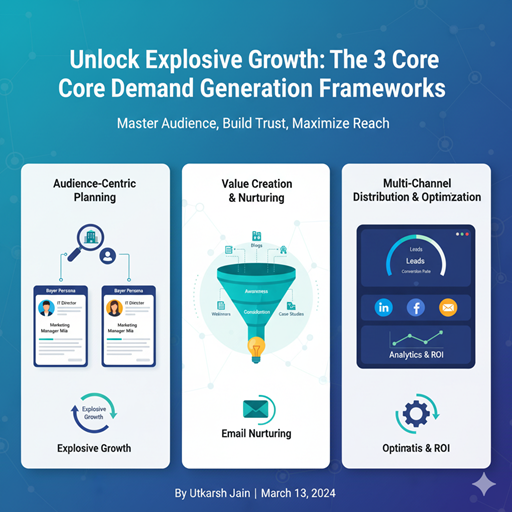
The 3 Key Frameworks for Demand Generation
Think of these frameworks as the foundational pillars supporting your entire demand generation strategy. Each plays a crucial role, and when combined effectively, they create a powerful, self-sustaining growth loop.
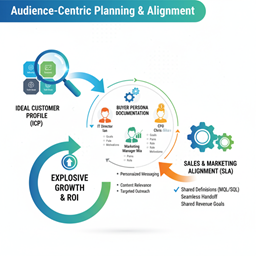
Framework 1: Audience-Centric Planning & Alignment (The “Be Ready” Framework)
The Core Idea: You can’t generate demand effectively if you don’t deeply understand who you’re trying to reach and ensure everyone internally is aligned on that target. This framework is all about preparation, deep research, and strategic alignment between marketing and sales.
Why it’s Critical:
- Precision Targeting: Avoids wasting resources on unqualified prospects.
- Message Resonance: Ensures your content and campaigns speak directly to your audience’s needs.
- Internal Harmony: Aligns marketing and sales teams on shared goals and definitions.
Key Components & Documentation:
- Ideal Customer Profile (ICP) Documentation:
- What it is: A detailed description of the type of company that benefits most from your solution and provides the most value to you. It’s the “who” at the organizational level.
- Why it matters: Filters out unsuitable accounts, allowing you to focus your resources.
- Includes: Firmographics (industry, size, revenue, location), Technographics (tech stack), Behavioral (pain points, goals, triggers).
- Buyer Persona Documentation:
- What it is: A semi-fictional, detailed representation of the individual decision-maker or influencer within your ICP company. This is the “who” at the personal level.
- Why it matters: Personalizes messaging, content, and sales outreach.
- Includes: Demographics, Job Role, Goals, Challenges, Buying Behavior, Information Sources.
- Sales & Marketing Alignment (SLA):
- What it is: A formal agreement defining lead definitions (MQL, SQL), handover processes, and shared revenue goals.
- Why it matters: Ensures a seamless transition from marketing-generated demand to sales-closed deals.
Infographic:
Framework 2: Value Creation & Nurturing (The “Be Helpful” Framework)
The Core Idea: Once you know who you’re talking to, this framework focuses on attracting them by providing immense value through content, building trust, and guiding them through their buyer journey with empathetic nurturing. It’s about educating and solving problems, not just selling.
Why it’s Critical:
- Attracts Qualified Leads: Draws in individuals actively seeking solutions to their problems.
- Builds Trust & Authority: Positions your brand as a helpful expert, not just a vendor.
- Shortens Sales Cycles: Educated prospects are more likely to convert faster.
Key Components:
- Content Strategy & Creation:
- What it is: Developing high-quality, relevant content at every stage of the buyer’s journey (awareness, consideration, decision).
- Why it matters: Answers questions, addresses pain points, and establishes thought leadership.
- Examples: Blog posts, whitepapers, webinars, case studies, videos, interactive tools.
- SEO & Keyword Optimization:
- What it is: Optimizing your content and website to rank higher in search engine results for relevant demand generation keywords and phrases.
- Why it matters: Increases organic visibility and attracts passive searchers looking for solutions.
- Lead Nurturing & Email Marketing:
- What it is: A systematic process of engaging prospects over time through a series of relevant communications, primarily via email marketing.
- Why it matters: Keeps your brand top-of-mind, deepens relationships, and moves prospects further down the funnel.
- Includes: Automated drip campaigns, personalized content delivery, segmentation.
Infographic Suggestion for Framework 2: A funnel graphic with “Awareness,” “Consideration,” “Decision” stages, showing different content types flowing through it (blogs, webinars, case studies), and an email icon for nurturing.
Infographic:
Framework 3: Multi-Channel Distribution & Optimization (The “Be Seen” Framework)
The Core Idea: You’ve created great content and know your audience—now it’s time to get that content in front of them effectively across various channels and continuously optimize your performance for maximum ROI.
Why it’s Critical:
- Wider Reach: Expands your visibility beyond organic search.
- Targeted Delivery: Ensures your message reaches the right people on the right platforms.
- Data-Driven Improvement: Allows for continuous refinement of your strategy to maximize results.
Key Components:
- Multi-Channel Content Distribution:
- What it is: Strategically promoting your content across various online platforms where your ICP and buyer personas spend their time.
- Why it matters: Increases touchpoints and awareness.
- Examples: Paid Social (LinkedIn Ads), Paid Search (Google Ads), Organic Social Media, Influencer Marketing, Online Communities.
- Lead Scoring & Prioritization:
- What it is: A system that assigns points to leads based on their engagement with your content and their fit with your ICP, helping identify the most sales-ready prospects.
- Why it matters: Ensures sales teams focus their efforts on the highest-quality leads, increasing conversion efficiency.
- Analytics & Continuous Optimization:
- What it is: Tracking key metrics (website traffic, conversion rates, cost per lead, ROI) and using that data to refine your strategies, channels, and content.
- Why it matters: Enables iterative improvement, ensures efficient spend, and drives predictable growth.
- Tools: Google Analytics, CRM dashboards, Marketing Automation platforms.
Infographic:
Conclusion: Your Path to Predictable Demand Generation
Mastering the 3 key frameworks for demand generation isn’t just a marketing advantage; it’s a business imperative for sustainable growth. By meticulously understanding your audience, consistently providing value through strategic content and nurturing, and then intelligently distributing and optimizing your efforts across multiple channels, you build a robust engine that delivers predictable revenue. Stop chasing leads and start generating demand—your pipeline (and your bottom line) will thank you for it.
FAQs about Demand Generation Frameworks
Q1: What’s the difference between demand generation and lead generation? A1: Demand generation is a broader, strategic approach focused on creating overall interest and awareness for your product/service, nurturing prospects from early engagement to sales readiness. Lead generation is a specific subset of demand gen, focused purely on collecting contact information from potential customers. Demand gen builds the “ecosystem” for leads to thrive.
Q2: How long does it take to see results from demand generation? A2: Demand generation is a long-term strategy. While some tactical gains can be seen in weeks (e.g., ad campaign performance), building strong brand awareness, trust, and a robust pipeline typically takes 3-6 months to show significant, consistent results. It’s an investment in sustainable growth.
Q3: Can small businesses use these demand generation frameworks? A3: Absolutely! The principles apply universally. Small businesses can adapt these frameworks by focusing on a very niche ICP, creating highly targeted content, leveraging organic channels effectively, and carefully choosing their distribution channels based on budget and audience. The key is consistent application.
Q4: Is email marketing still essential for demand generation? A4: Yes, email marketing remains one of the most powerful and cost-effective channels for demand generation, especially for nurturing leads. It allows for personalized communication, deep segmentation, and direct delivery of valuable content, playing a crucial role in moving prospects through the buyer’s journey.
Ready to implement these demand generation frameworks and unlock your growth potential? Contact us today for a free consultation to assess your current strategy and build a customized demand generation roadmap!